
Feather evolution after flight loss
Many species of birds have lost the ability to fly. Other than feather vane symmetry, microscopic features of feathers do not readily evolve after flight loss in birds compared to macroscopic traits such as body mass or relative wing and tail fan size. Feather modification after flight loss might follow the reverse pattern of both feather developmental models and the initial evolution of feathers in the lineage leading to birds. Despite release from selective pressures for flight, complex developmental processes mean that early stages of feather development are conserved for millions of years due to the lesser cost of feather growth compared to bone or muscle.
Study: Saitta et al. 2025, Evolution
Press Release: Field Museum
Media: Earth.com, Live Science, Scientific Inquirer
Photo: Flightless Galapagos Cormorant & Cassowary: Peter Makovicky (coauthor); Saitta & Penguin: Field Museum, Kate Golembiewski
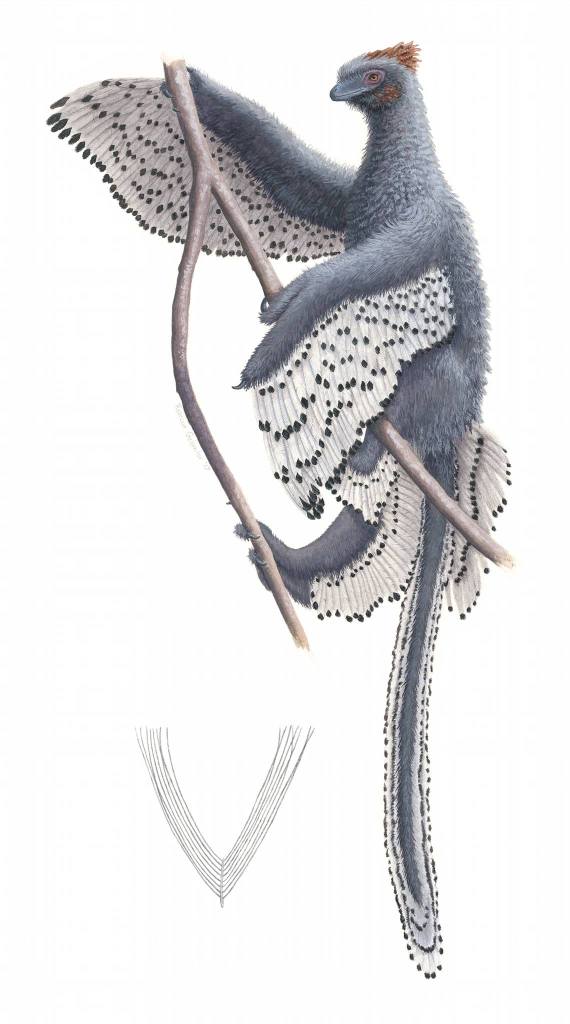
A gliding, four-winged dinosaur’s feathers
Dinosaurs, such as Anchiornis, had shaggy, primitive feathers prior to the evolution of highly adapted feathers in modern birds.
Study: Saitta et al. 2017, Palaeontology
Press Release: University of Bristol
Media: New York Times, Smithsonian Magazine, Live Science, Der Spiegel (German), briefly discussed in I Know Dino & by Carol Hand (2019) Evolution of Birds ABDO Publishing Company
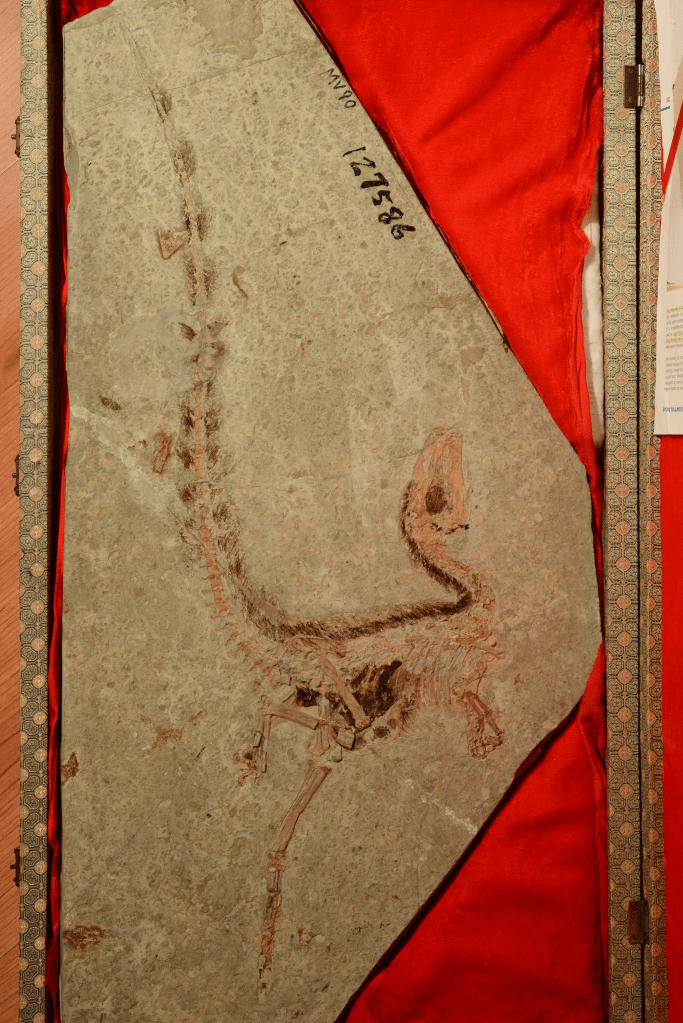
Structures in dinosaur fossils are feathers, not collagen
A likely final blow against the argument that filaments around the bones are collagen fibers from the skin. They are feathers, based on overwhelming evidence.
Study: Smithwick, Mayr, Saitta, et al. 2017, Palaeontology
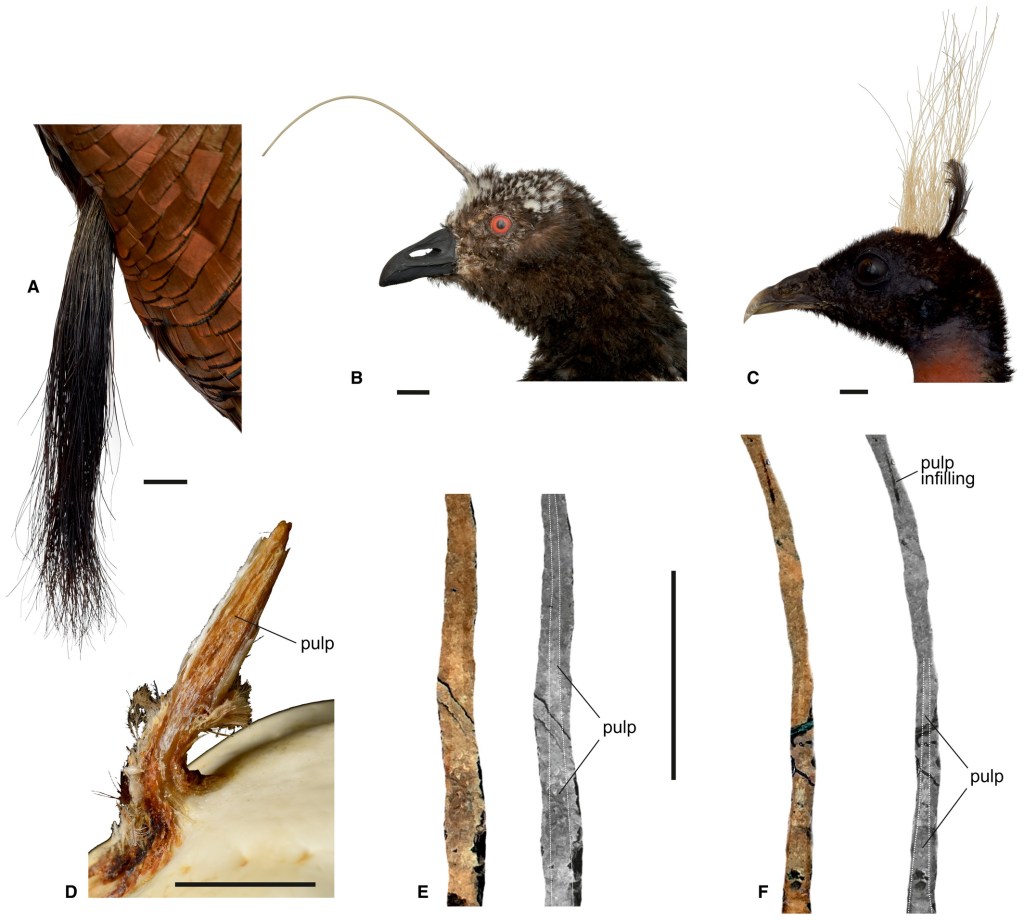
Psittacosaurus tail bristles resemble structures on modern birds
External and internal structural similarities between the dinosaur’s bristles and bristles on the heads and ‘beards’ of some modern birds suggest a shared ancestry of basic developmental processes in feather-like structures deep in the evolution of dinosaurs. Bristles possibly functioned in sexual display.
Study: Mayr, Pittman, Saitta, et al. 2016, Palaeontology
Media: Discover Magazine, Inverse, le Scienze (Italian)

 Evan T. Saitta, Ph.D.