Clay ‘death masks’ preserve dinosaur ‘mummies’
Articulated ‘duck-billed’ dinosaur skeletons can, in rare instances, be surrounded by a <1 mm thick layer of clay, preserving details of their skin, scales, and hooves as they were in life.
Study: Sereno, Saitta, et al. 2025, 
Press Release: University of Chicago
Media: New York Times, Scientific American, Smithsonian, Gizmodo, Popular Science, National Geographic, Discover Magazine, Associated Press, Reuters, CNN, IFL Science, FOX 32 Chicago, BBC Wildlife, GEO (German), ABC, CBC, CBS Chicago, NPR, Ars Technica, IFLScience
Coauthor Summary: The Conversation
Art: Dani Navarro
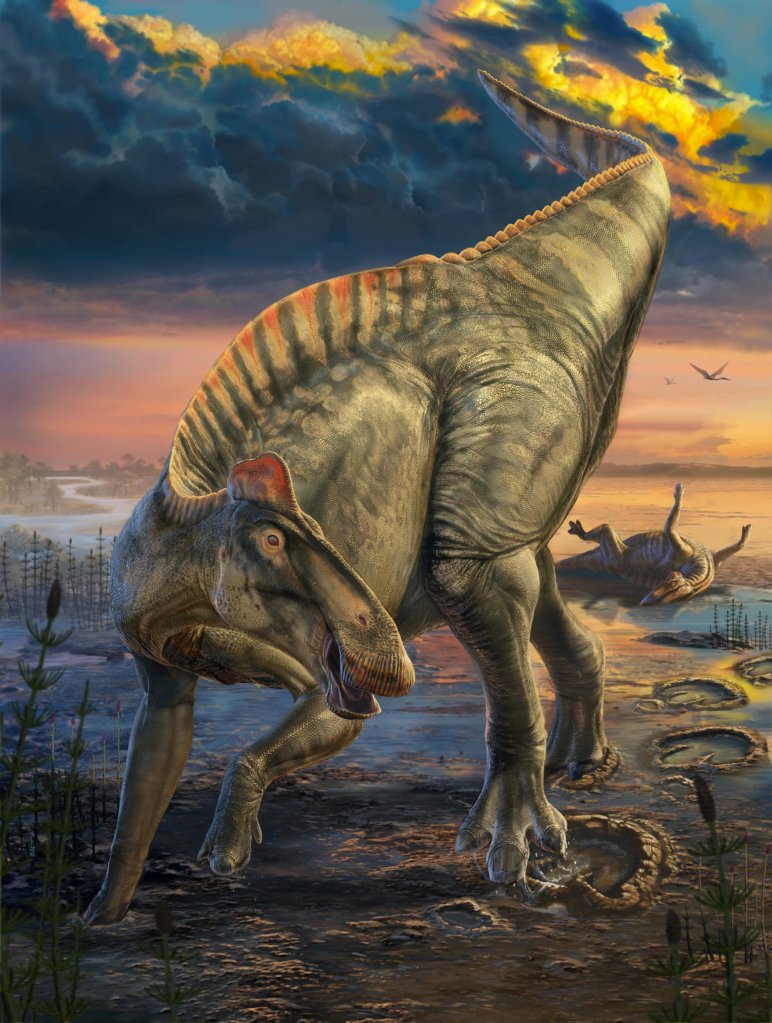
This may be the single best paper I’ve released. From field to lab to 3D reconstructions along with a suite of useful terms defined, it’s a tour de force, and it tells a coherent story about how these remarkable fossils come to be and what we can learn from them” – Dr. Paul Sereno, Professor of Organismal Biology & Anatomy at The University of Chicago
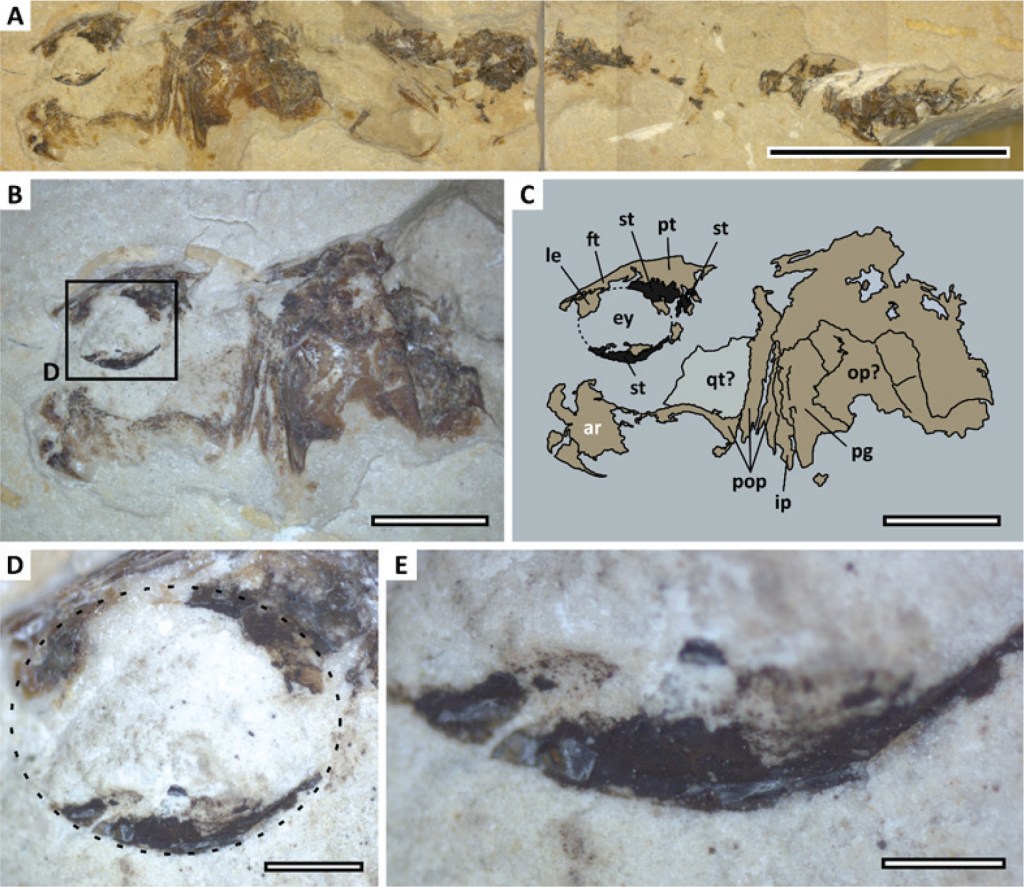
Fossil fish eye
Fossil melanin preserved in the eye of a roughly 113-million-year-old Brazilian fish, presumably from the pigmented retina, reveals the burial temperatures experienced by the fossil and may provide clues about the visual capability and ecology of the fish during life.
Study: Prado et al. 2025, Lethaia
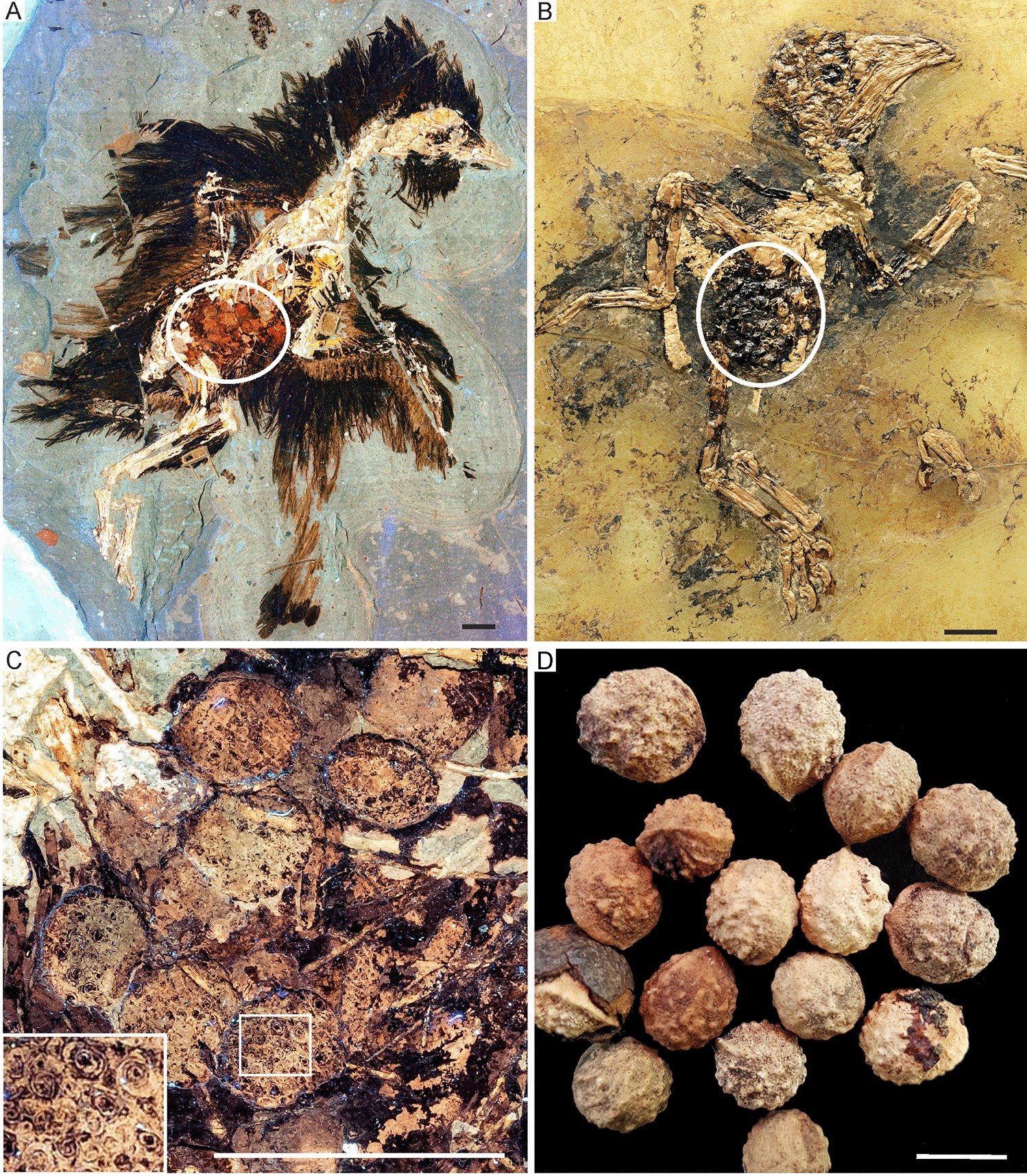
Ancient birds were feeding, not breeding
Structures in the abdomen of Mesozoic birds interpreted as preserved ovaries are unlikely to be so, given their little preservation potential. Instead, they match plant propagules found in the same fossil beds – indicating that these were stomach contents.
Study: Mayr et al. 2020, Scientific Reports
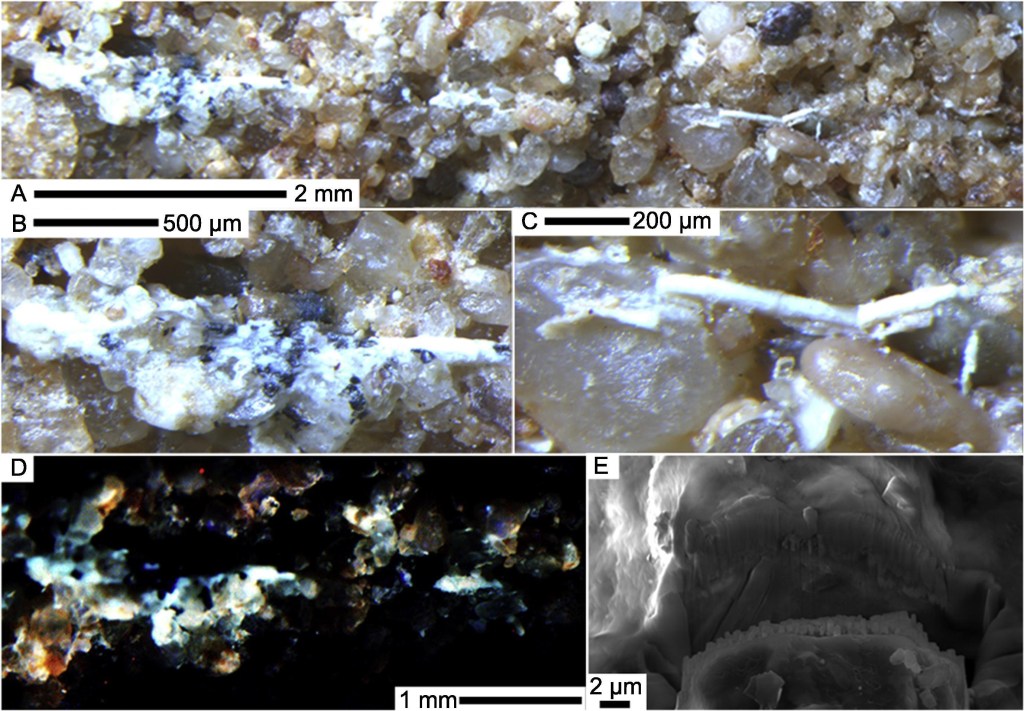
Shuvuuia feathers are inorganic
Fibers around the dinosaur are calcium phosphate, not organic keratin protein as suggested by antibody studies. Antibodies possibly adhered to glue on the fibers applied during excavation or preparation. The preserved salts are used to harden keratin in life and could indicate that the feathers were more complex, branching structures, rather than simple strands.
Study: Saitta et al. 2018, Organic Geochemistry
Media: Briefly mentioned in National Geographic
Fossils with soft tissues are not always rotten
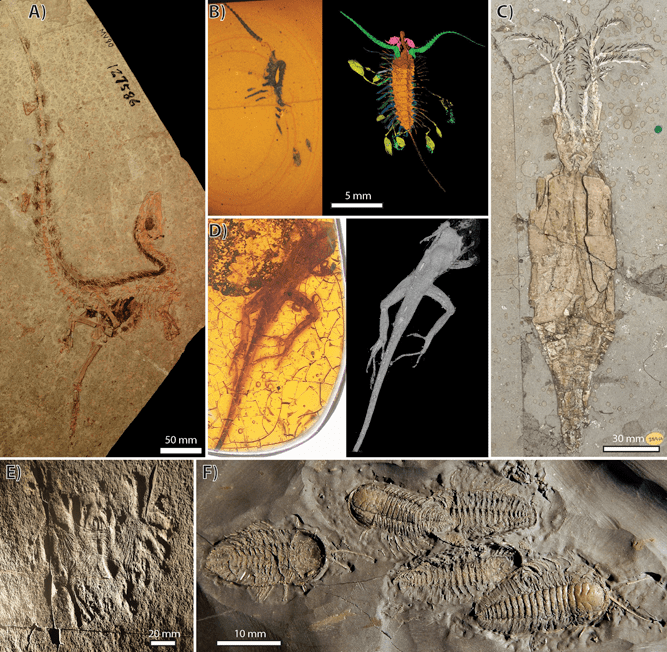
Fossilization involves a complex interplay of multiple factors, beyond just microbial decay. In fact, some preserve soft tissues because such decay was limited in their burial environment. This understanding influences our ability to properly interpret fossils to study evolution.
Study: Parry et al. 2017, BioEssays

 Evan T. Saitta, Ph.D.